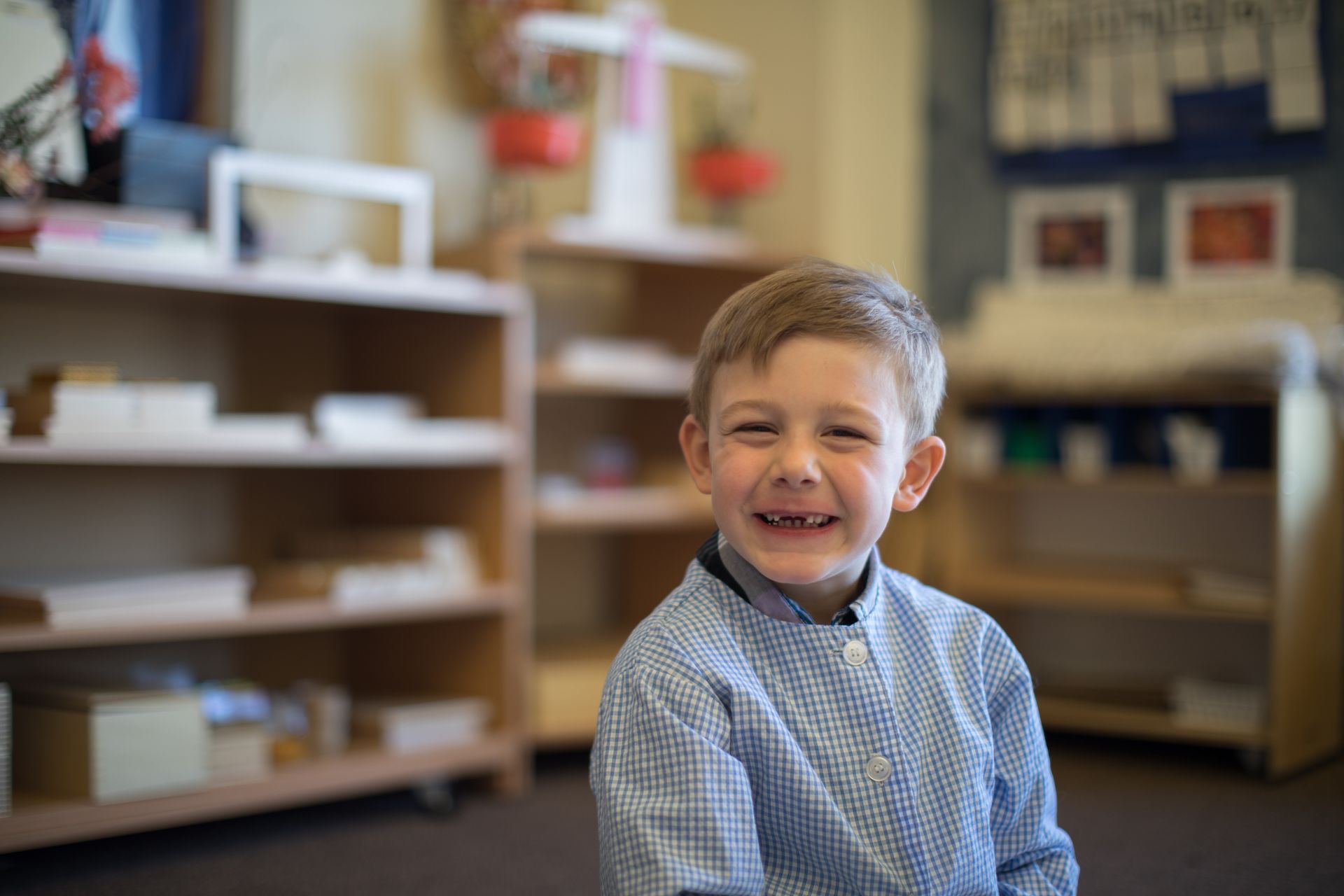
Human emotion is a remarkable thing. We are all fortunate to experience such a rich, wide-ranging set of feelings—but for a young child, those big internal shifts can feel like a turbulent roller coaster!
As adults, we know how easily our own emotions can take over in challenging moments. So how can we help our children develop healthy, lifelong tools to navigate their feelings independently?
In a Montessori environment, we view emotional self-regulation as a foundational skill, much like learning to pour water, tie a shoe, or write a letter. It isn't about controlling or suppressing how a child feels; rather, it is about giving them the grace, space, and precise language to understand themselves.
While infants and young toddlers naturally rely on trusted adults for co-regulation and physical comfort, older toddlers, primary, and elementary children can gradually learn to navigate their emotions with increasing independence.
When supporting big feelings at home, we find a simple three-step approach—Accept, Observe, React—provides a gentle, reliable framework.
1. Accept
Accepting our emotions can often be the hardest step, even for adults. Many of us grew up learning that certain emotions (like joy) are "good," while others (like anger or sadness) are "bad."
We can help our children build a healthier relationship with their inner world by reminding them often: There is no wrong way to feel.
Emotions are simply natural human responses to life experiences. They do not define who we are, nor are they permanent. They serve as valuable messengers that teach us about ourselves, others, and our surrounding environment.
Practical Tip: Name the Feeling
One of the most effective ways to help a child accept an emotion is to give it a name. Keep it simple and objective. If your child is overwhelmed or lacks the vocabulary to express what they are experiencing, offer a calm, non-judgmental observation:
"You seem disappointed that outdoor time is over."
"It looks like you are feeling frustrated with that puzzle."
State it simply as a fact—without judgment, shame, or an immediate rush to "fix" it. Validating their emotional reality helps the child feel seen and understood.
2. Observe
Once an emotion is acknowledged, the next step is learning to observe it. To help your child practice this skill, it is best to discuss it during quiet, peaceful moments—such as over family dinner, during a walk, or while reading together before bed.
How do we guide a child to observe an emotion? We invite them to step back and notice the feeling as something happening within their body, rather than something that is them.
Practical Tip: Physical Clues
Ask your child where they feel the emotion physically in their body:
- Do they feel a tightness in their chest or shoulders?
- A heavy or fluttery feeling in their stomach?
- Clenched fists or a warm feeling in their face?
Helping children tune into their physical cues builds self-awareness. When they learn to recognize that a pounding heart or tight tummy is just their body's way of processing frustration, the feeling becomes less frightening and easier to manage.
3. React
How we choose to react to our feelings is where true self-regulation develops. In Montessori, we talk about freedom within limits: children have the complete freedom to feel whatever they feel, but boundaries remain around how they express those feelings behaviorally.
Leaning In
Allowing an emotion to run its natural course is often the healthiest path. Resisting or hiding a feeling usually prolongs it, whereas letting it pass like a wave allows it to dissipate. You might offer gentle support:
"I can see you're feeling really sad right now. Would you like a hug, or would you prefer to sit quietly near me for a moment?"
Proactive Problem-Solving
During calm moments, talk with your child about healthy outlets for intense energy. Establish clear, consistent boundaries around acceptable behavior:
- What is always okay: Asking for space, taking deep breaths, stomping feet on a rug, drawing a picture of the feeling, or squeezing a pillow.
- What is not okay: Hitting, biting, throwing items, or using hurtful words.
When children know what options are available before big emotions hit, they feel empowered to choose a safe response.
The Adult as a Guide
One of the most powerful tools we have as parents and educators is our own modeling. When we handle our own moments of frustration calmly—or when we openly acknowledge our mistakes and apologize—we demonstrate to our children that navigating emotions is a lifelong journey.
By meeting our children's big feelings with empathy, clear boundaries, and predictable routines, we give them the confidence to navigate life's highs and lows with resilience and self-assurance.
Connecting Home and School
If you ever have questions about how our guides support social-emotional growth and grace and courtesy in the classroom, please feel free to reach out to our team. If you'd like to see how we guide children through big emotions, we invite you to
schedule a tour.