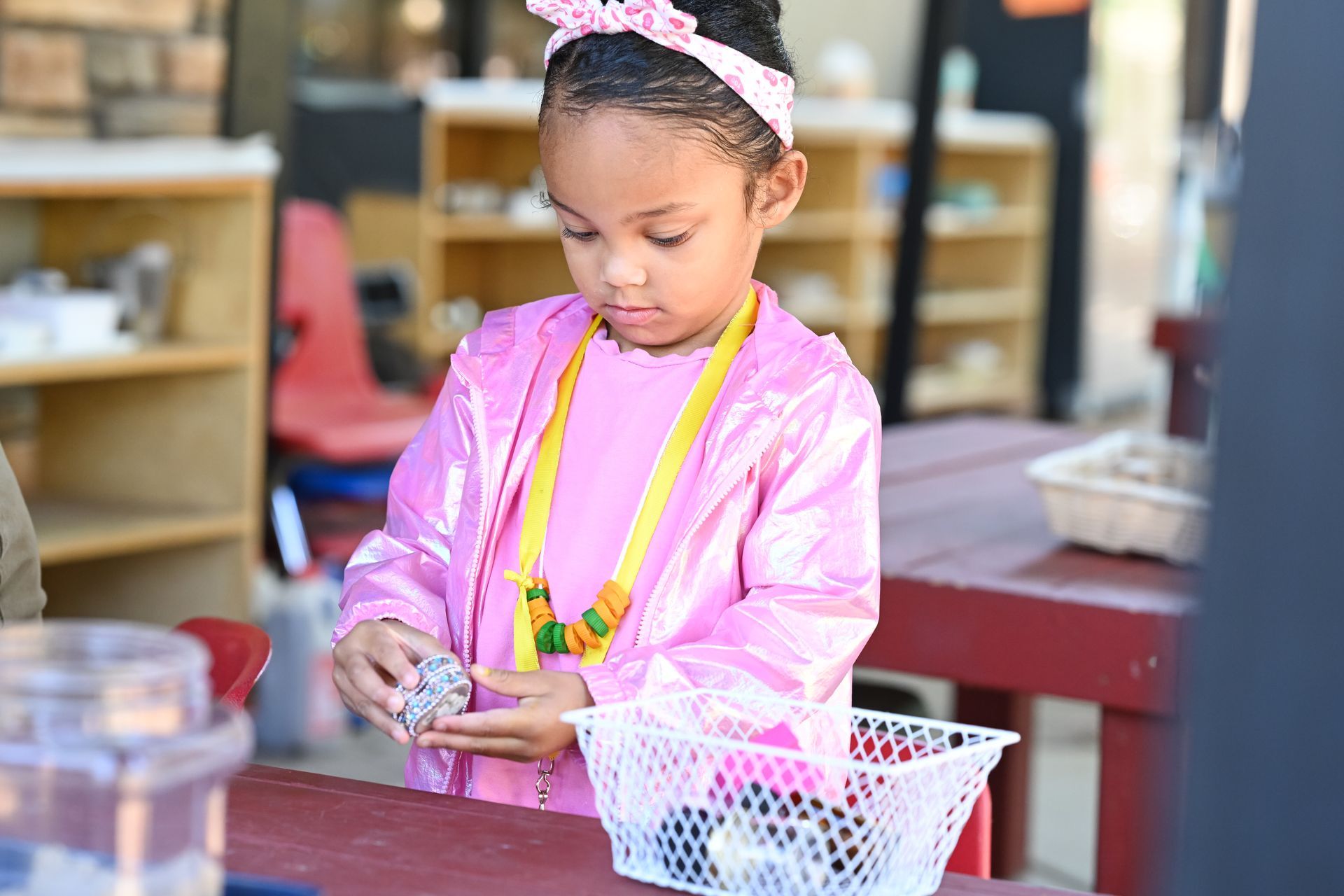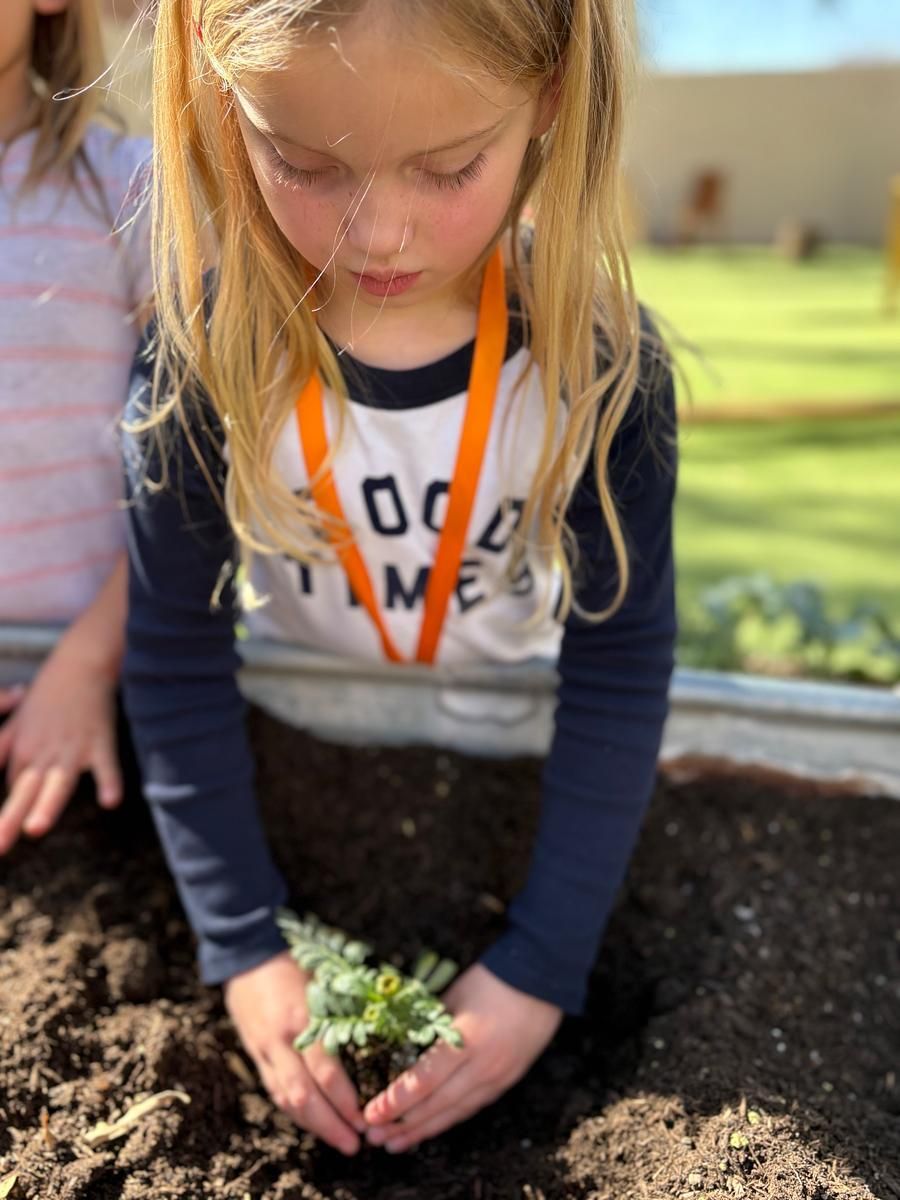
Part of belonging to a community is participating in the daily rhythms that care for our shared spaces. In a Montessori environment, we provide young children with meaningful ways to contribute as active, valued community members.
Children naturally gravitate toward real work. By helping maintain their classroom, home, or school, they build more than neat habits—they build a deep sense of belonging and agency. In caring for their environment, they truly begin to feel at home.
1. Laying the Groundwork: Behind-the-Scenes Preparation
For a child to successfully care for their surroundings, adults must perform thoughtful prep work behind the scenes. We ensure materials are real, functional, and sized specifically for small hands.
Because young children thrive on repetition, we also prepare spaces so children can work as long as their focus demands:
- Mirror Polishing: Portioned containers with just enough polish for a single session.
- Flower Arranging: Small vases, tiny funnels, and child-safe shears.
- Table Washing: Soft cloths, natural sponges, and small basins sized for little hands.
2. Real Work with Natural Consequences
Montessori Practical Life activities are never "busywork" designed merely to keep hands occupied. The outcomes are tangible and necessary:
Dirty Table ➔ Child Scrubs Surface ➔ Clean Workspace
Drooping Plant ➔ Child Waters Roots ➔ Healthy Growth
Wet Floor ➔ Child Mops Spill ➔ Safe Walkway
The Rule of Non-Interference
Because young people are learning how their actions directly impact their environment, adults consciously refrain from re-doing a child's work. If a child washes a table and leaves a small spot behind, we leave it as is. Swooping in to "fix" or re-clean the table signals to the child that their effort was inadequate, undermining their developing confidence. Later on, another child may notice the spot and choose to scrub it—allowing the community to maintain itself naturally.
3. Designing Community-Specific Activities
To determine which activities belong in an environment, we observe the children's emerging needs and identify practical daily maintenance tasks.
- If the classroom has an easel with paint, we provide an easel-washing activity.
- If we use chalkboards, we set up a board-cleaning tray.
- If autumn leaves blow indoors, we provide a small broom and dustpan station.
Activities adapt to community norms, local culture, climate, and schedule length. Regardless of variables, every activity serves an intelligent, practical purpose within the community's daily rhythm.
4. From Internal Satisfaction to Community Impact
A child’s connection to Practical Life evolves through distinct developmental stages:
- Initial Stage: Driven by personal sensory exploration and mastery of movement. Example: A child scrubs a table simply to enjoy creating and wiping away soapy bubbles.
- Mature Stage: Driven by a conscious contribution to the greater good. Example: A child scrubs a table because they notice it is dirty and want others to have a clean place to eat.
This realization—that their labor directly supports others—sparks profound joy. They move from individual satisfaction to meaningful community pride.
Acknowledgment vs. Praise
When acknowledging a child's contribution, tread lightly. Avoid empty praise ("Good job!") and focus on objective observation ("You noticed the floor was wet and dried it so no one would slip"). This preserves their internal motivation and reinforces that work is done for self and community, not adult approval.
5. Tailoring Activities at Home
Parents frequently ask how to replicate this sense of purpose at home. You don't need elaborate setups—just low, accessible touchpoints:
- Entryway: A low hook for coats and a dedicated floor basket for shoes.
- Dining Area: A accessible lower kitchen drawer stocked with placemats, napkins, and utensils for setting the table.
- Bedrooms: Uncluttered shelves for toys and a lightweight laundry hamper.
The Art of the Slow Presentation
When showing your child how to perform a home routine, remember that adults act on autopilot, while children are learning to master movement.
Slow down and isolate every step:
- Carry the tray with two hands.
- Unroll the placemat smoothly from left to right.
- Place the plate in the center.
- Set the fork on the left and the spoon on the right.
6. Significance and Belonging
Learning to care for surroundings is a transformative gift. Through real responsibility, children discover that their presence matters, their actions have weight, and their contributions make a difference.
Interested in seeing how young children care for their community firsthand?
Schedule a tour to visit our classrooms today!