
Primary
An academic program for students 2.5 to 6 years old in Gilbert, Arizona.
Designed for children between the ages of 2.5 to 6 years, our Primary classrooms are created for purposeful learning and to nurture individual self-development within the context of a group setting at our Montessori school in Gilbert, AZ. Students will have the opportunity to build self-confidence, develop a lifelong love for learning, and by their final year, become valuable mentors to their younger classmates. The Primary program begins with a foundation of practical life skills and culminates with an academic foundation for future higher learning environments.
Child-centered (not teacher-centered)
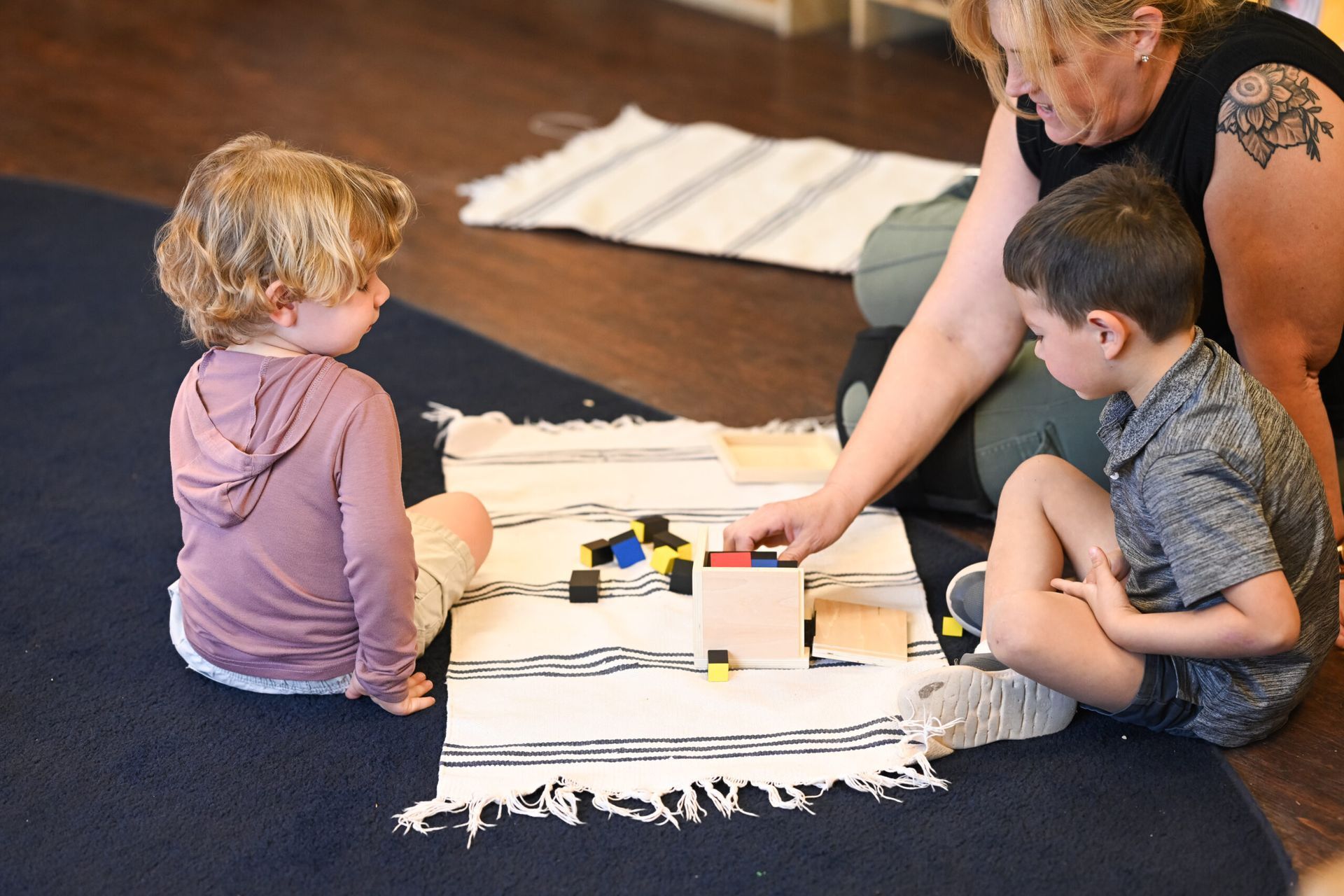
Unlike conventional classrooms, where all children are expected to pay close attention to the teacher, our program does the opposite – the teacher is trained to closely observe your child’s interests, tendencies, and needs. Rather than standing at the front of the classroom giving directions, the teacher is down at your child’s level, engaged with individuals or a small group. The lessons given during these times provide children new information in a more focused setting, allowing for easier absorption of the presented materials.
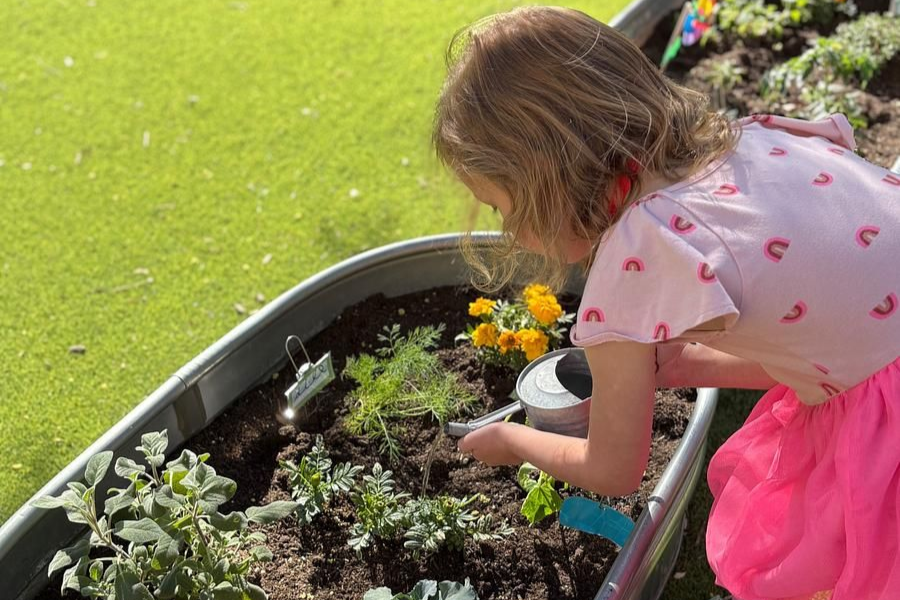
A mixed-age classroom
The benefits of a mixed-age classroom are many. Children’s social and emotional development are strengthened and they develop stronger peer relationships. There are also leadership opportunities for the older children, which in turn, reduces competition among the group. The younger child learns by observing the behavior and activities of the older children while the older child gains self-confidence, leadership skills, and responsibility by setting an example for younger friends.
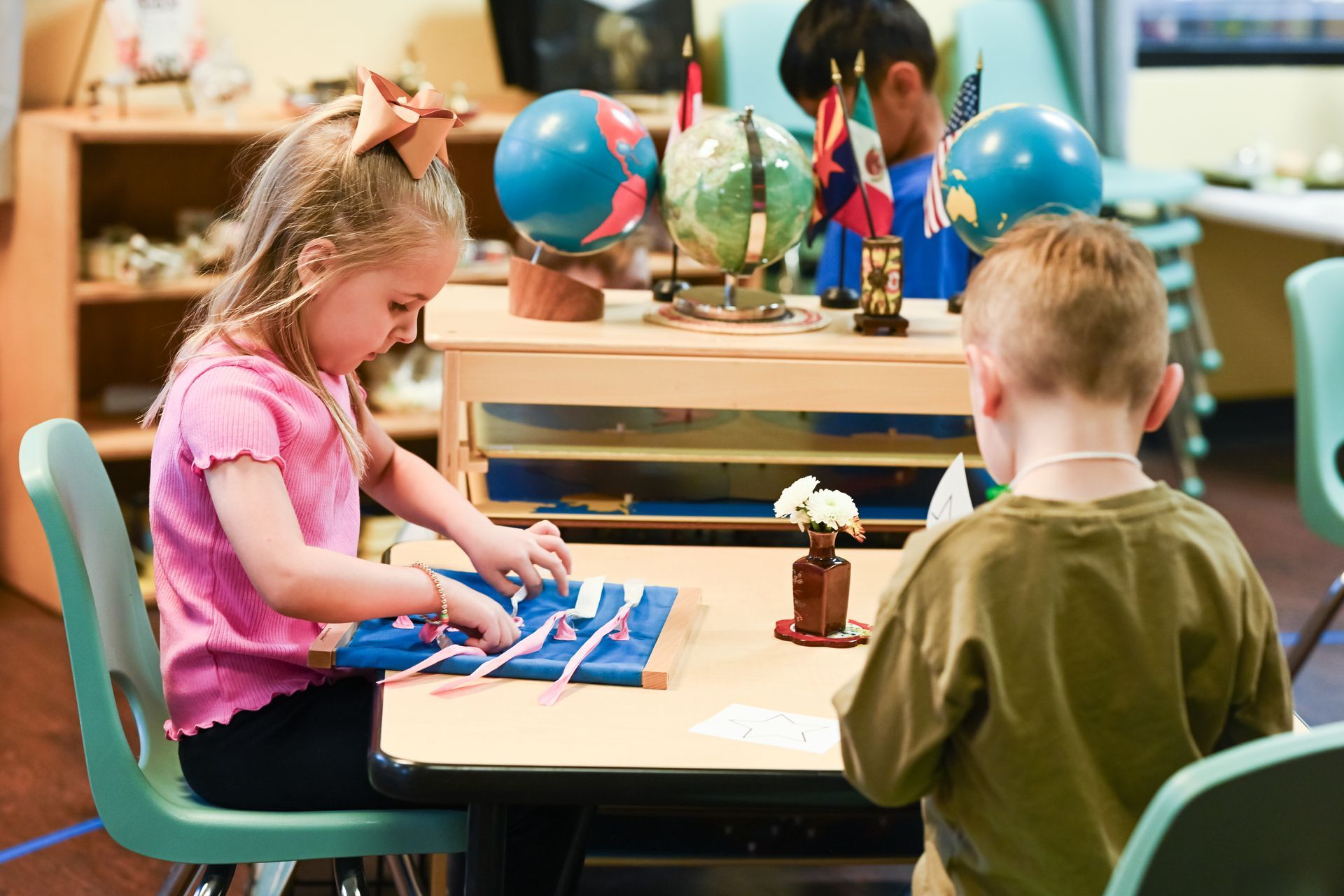
The gift of choice
Your child will be introduced to a broad range of concepts and activities in individual and small group lessons. The real learning, however, occurs through independent activity by choosing to explore it, repeat it, and perfect it. Because the curriculum is customized for each student, your child can work at an individualized pace while participating in a mixed-age classroom community.
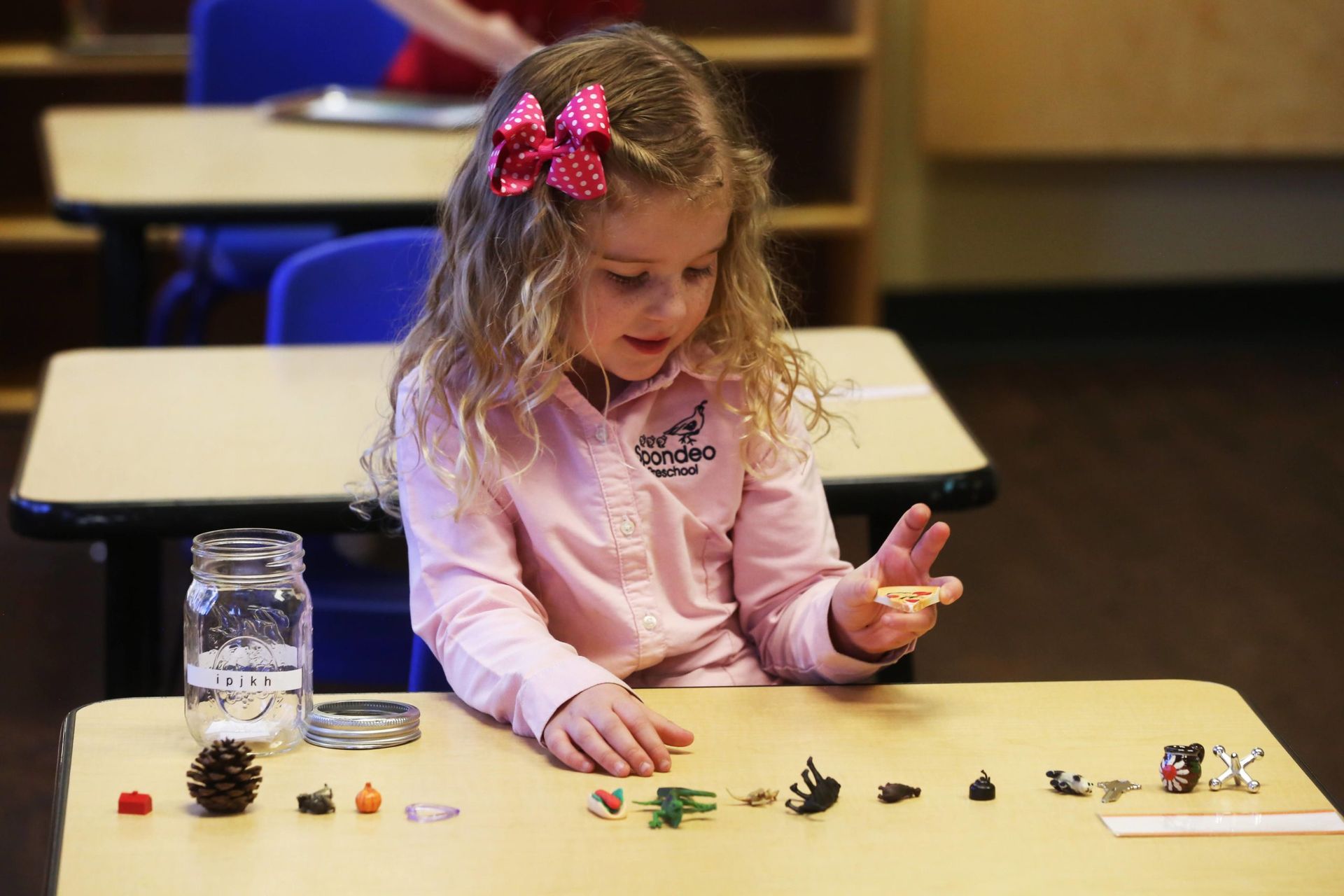
Hands-on materials
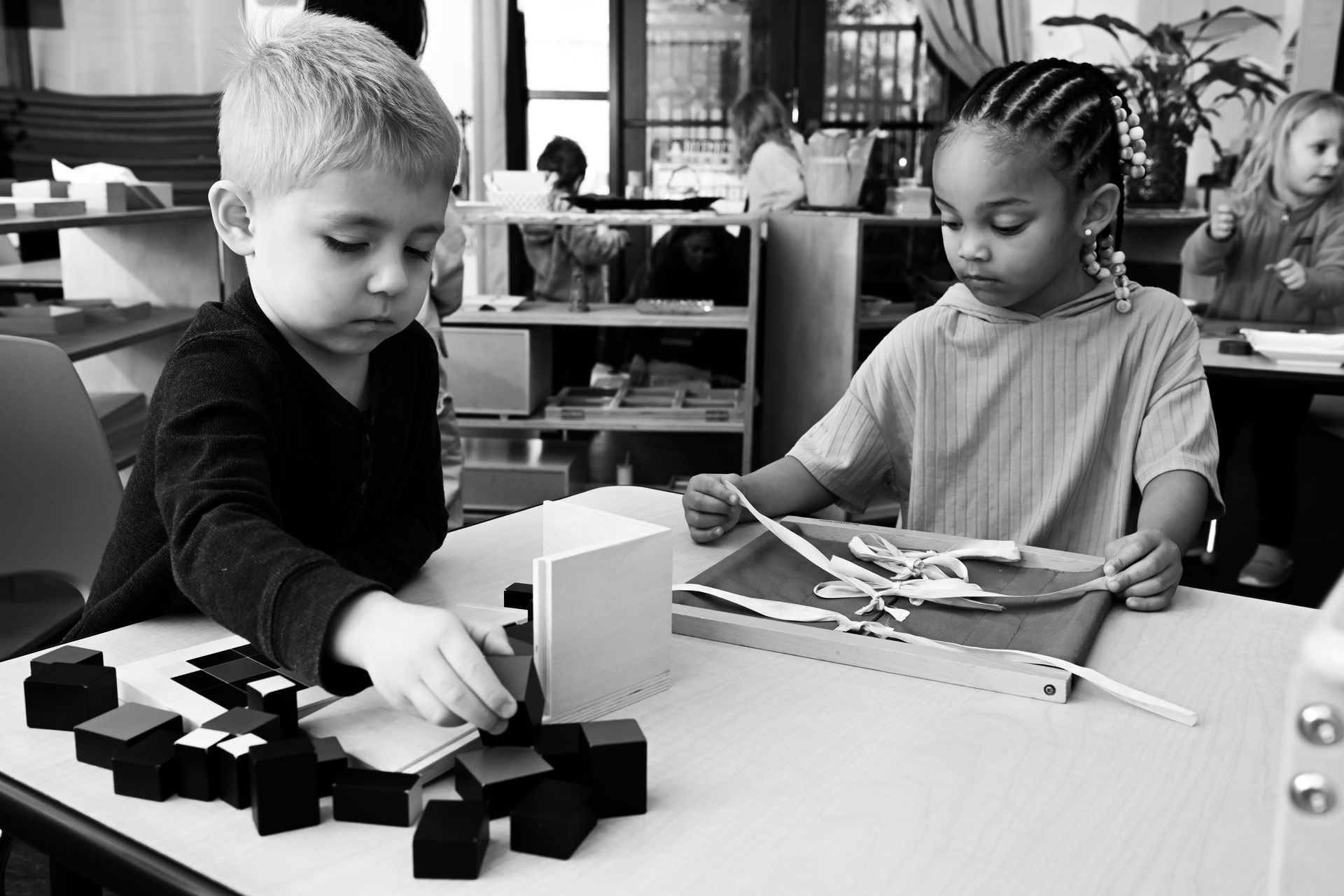
The scientifically designed Montessori materials are intended for exploration and discovery, allowing children to grasp concepts through manipulation and experience, rather than rote memorization. Through continued use of the materials, children develop a concrete understanding of abstract concepts, such as mathematics, providing a solid foundation for learning in the future.
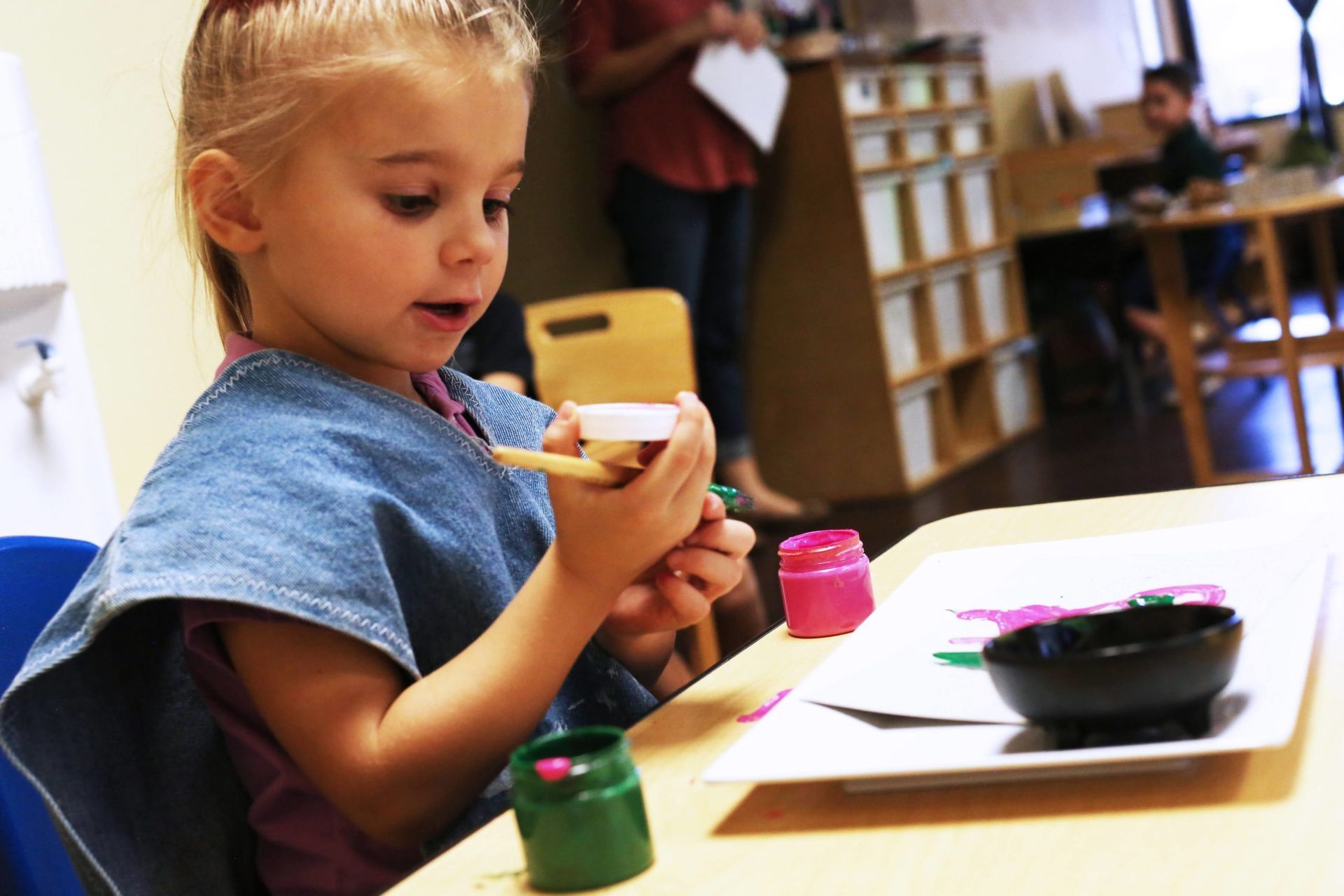
Group activities and play
While most of the day is spent in self-directed work, there are also times for group activity and play. The teacher may gather a group for songs or to tell stories about a cultural, scientific or historical theme of interest. Ample time is also given to run, dig, explore and play with friends outdoors.

One size does not fit all
Instead of a top-down curriculum based upon age, the Montessori teacher is trained to respect your child’s unique potential so as to provide lessons best suited for precise moments of development. Your child will be challenged in a highly personalized way, not to a generic standard.
Kindergarten included
Montessori is a continuum of education that allows your child to build upon experiences each year. Your child will stay in the Primary classroom for three-plus years, which includes their Kindergarten year.
In the Kindergarten year, reading and writing come to life from phonetics and grammar symbols. We introduce numbers and the decimal system, geometric figures, and the geographical countries of our world. Your child finishes their Kindergarten year in the Primary program with a strong set of academic skills — and just as importantly, with the attitude that learning is fun, exciting, and boundless
through Montessori kindergarten education in Gilbert, Arizona.
“My son attended school here for almost 3 years. My son recently turned four and can write all the numbers and letters of the alphabet in print and cursive. He knows their sounds and can sound out and spell simple words, and can count to 100.”
Alicia M.
“Choosing this particular Montessori preschool/kindergarten was the best decision we could have made for our daughter and for our family. Spondeo has wonderful administration, and excellent teachers. "
Kristina C.
“Spondeo preschool has been a wonderful, supportive and caring environment for both of my children to learn and grow."
Alexis A.
Frequently Asked Questions About Our Primary Program
Does Spondeo Montessori assign homework in the Primary classroom?
Montessori aims for intrinsic motivation within the child. The goal is for children to be motivated by the joy of learning, not by the need to complete an assignment for a grade. Homework can often lead to pressure and burnout, however, when children want to continue doing work at home (language, math, etc.) as natural extensions of their daily learning, teachers can assist parents in supporting the child’s wishes. However, if a child wants to do work at home, we encourage parents to speak with the Lead teacher for suggestions on how to support the child’s continuation of work at home.
What is the Kindergarten curriculum in a Primary Classroom?
Kindergarten students in our Primary classrooms will be introduced to the learning areas of Grace & Courtesy, Practical Life, Sensorial, Language, Math, Science, Culture, Geography, Art and Care of the Environment. Spondeo Montessori educators work to align the Kinder curriculum with the current Arizona standards and expectations for all kindergarten aged children.
How do teachers make sure children are learning the right material for their age?
Trained Montessori teachers find a balance between children choosing their own work under the guidance and suggestions of the Lead teacher. Children are provided choices of more challenging work when they have had a lesson and need to practice the work until mastered.
How do children do when transitioning from Montessori to more traditional methods of education?
Children that spend time learning in a Montessori classroom gain many skills that will aid them in their future educational experiences. They have a love of learning and a confidence in their abilities. The materials in a Montessori classroom are different from traditional environments, but they still provide children with basic knowledge in the areas of math, language, geography, some science and practical life skills. Montessori experienced children are oftentimes academically ahead of their peers in other schools, but this can depend on what age they make the transition to a different school.
How do children get a well-rounded education if they choose their own work?
Teachers ensure each child progresses at their own pace across all areas of the curriculum by giving individual lessons and guiding them to explore different subjects.
How is individual learning managed?
Children work independently on lessons and materials they've been given. The teacher keeps track of each child's progress and makes sure they are not interfering with others.