When a new child comes into our lives, our natural instinct is to offer them the absolute best. Yet, as every parent quickly learns, children develop rapidly, and their developmental needs change dramatically from one month to the next.
By establishing a clear, simple plan, you can prepare a bedroom space for your young child that not only supports their burgeoning independence but also helps you feel organized and ready for each new milestone.
In the Montessori tradition, we refer to this as the prepared environment. A child’s room should have clear boundaries that help them feel secure, comfortable, and capable. We achieve this by keeping the space minimal and creating distinct zones for specific activities:
- Physical Care (diapering and dressing)
- Sleeping (rest and restoration)
- Feeding (bonding and early nutrition)
- Movement (gross and fine motor exploration)
While these zones will naturally shift as your child grows, the underlying philosophy remains identical. A child's room must be practical, beautiful, orderly, and safe, while simultaneously respecting the functional needs of the parent.
Stage 1: Birth to Five Months (The Symbiotic Period)
Young infants are adapting to a massive new world outside the womb. To build basic trust in their environment, they require consistent points of reference. Predictability with furniture, people, and daily rhythms allows newborns to feel secure enough to begin exploring.
Physical Care
During these first months, the physical care area features tools for diapering and dressing. At this stage, you are your baby's entire world.
Spondeo Design Tip: Position the changing pad so you are standing at your baby’s feet rather than their side. This orientation allows for direct, face-to-face eye contact. Use this time to speak to your child, describe what you are doing, and name their body parts, transforming a routine chore into a rich language lesson.
Sleeping
Ideally, the sleeping zone features a low floor bed rather than a traditional crib. A floor bed provides an unobstructed view of the room and complete freedom of movement. Because this mattress can remain consistent as your baby grows, we recommend starting with a standard twin mattress directly on the floor (or on a low slats frame). As they develop motor skills, they will slither, crawl, and eventually learn to independently access their own bed.
Feeding
This space is designed for quiet bonding and comfort. It requires a supportive chair for the adult and a small side table or shelf to keep hydration, nursing pads, or burp cloths within arm's reach, ensuring the feeding process remains peaceful and uninterrupted.
Movement
The movement zone is the heart of early Montessori development. It consists of three essential elements: a soft movement mat, a low horizontal wall mirror, and a low, open shelf.
A secure hook in the ceiling above the mat allows you to hang and rotate visual Montessori mobiles. The wall-mounted mirror allows infants to track their own movements and discover their physical forms, while the low shelf houses a few tactile materials that your baby will eventually slither toward.
Stage 2: Five to Twelve Months (From Weaning to Walking)
As your child transitions from sitting to crawling and pulling up, the environment requires only a few key modifications to keep pace with their expanding capabilities.
Feeding & The Weaning Table
While the adult chair remains for morning and evening snuggling, this stage introduces the weaning process—a significant milestone where the child begins to discover their physical autonomy.
This is the perfect time to introduce a weaning table. This is a small, heavy, and highly stable wooden table paired with a supportive, low-slatted chair that allows a child learning to sit upright to keep their feet flat on the floor.
The parent utilizes a low stool to sit at the child's level, offering first foods from a beautiful, real place setting.
Movement
To support the gross motor drive to pull up and cruise, secure a wooden pulling-up bar directly over the wall mirror. The soft movement mat can eventually be removed as the child gains friction on the floor.
Introducing a heavy, low ottoman provides a wonderful structural support for crawling around, pulling up, and cruising.
Stage 3: Twelve to Thirty-Six Months (The Walking Child)
Walking is a monumental achievement. Once a child stabilizes on two feet, their hands are freed from the task of transportation and can now be used to actively manipulate and transform their surroundings.
Sleeping Area
The floor bed remains an excellent anchor for the room. Because your toddler can now easily navigate heights using their whole body, the mattress can be raised slightly onto a low toddler frame if desired.
Physical Care & The Independent Wardrobe
As toilet learning begins, the physical care routine gradually shifts to the bathroom. This allows you to remove the changing table from the bedroom entirely.
In its place, introduce a low, open child-sized wardrobe featuring a few carefully curated clothing choices on hangers, a small drawer for socks, and a full-length mirror. This empowers your toddler to actively participate in choosing their clothes and dressing themselves each morning.
Movement Area
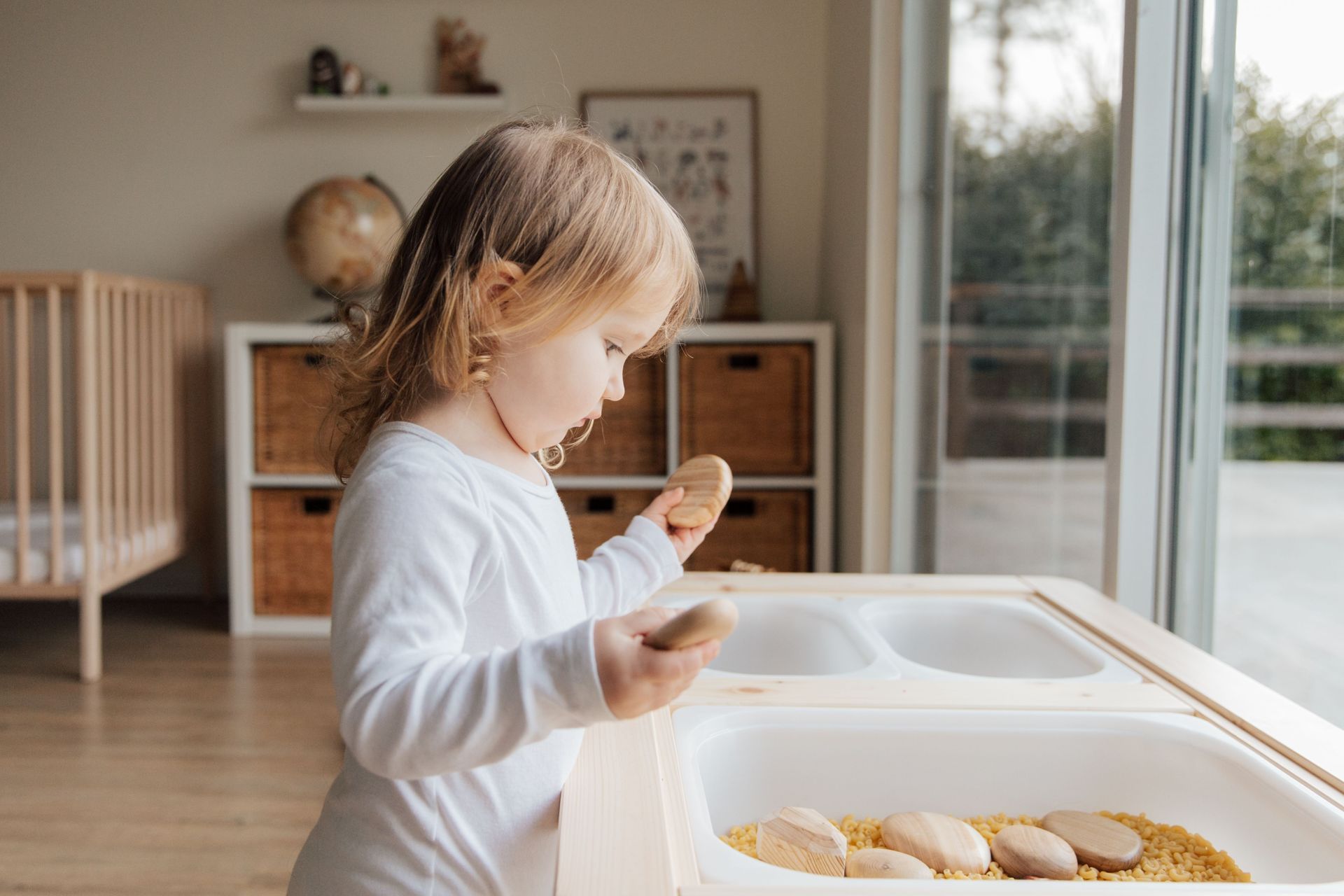
Once your child walks confidently, the pulling-up bar, floor mat, and wall mirror can be safely retired. The bedroom workspace should now center on low, open wooden shelves displaying individual activities on trays.
Always ensure that any furniture in this space is strictly child-sized—proportionate to their physical strength so that using it offers a satisfying, manageable challenge that leads to genuine mastery.
Observing Your Child
The transitions outlined above should never be executed based strictly on the calendar. Instead, they should follow careful, objective observation of your unique child. Watch for signs of readiness: Are they trying to pull up on the sofa? It is time for a cruising bar. Are they showing interest in dressing? Introduce the low wardrobe.
A child’s awareness of order and beauty begins in the home, gradually expanding to their school environment, their local community, and eventually the world. The experiences they have within these early walls form the foundation of who they become.
If you are looking for visual inspiration or practical layout ideas for your home, we invite you to see these principles in action on our campus. Our prepared Toddler and Primary environments at Spondeo are designed explicitly around these developmental milestones.