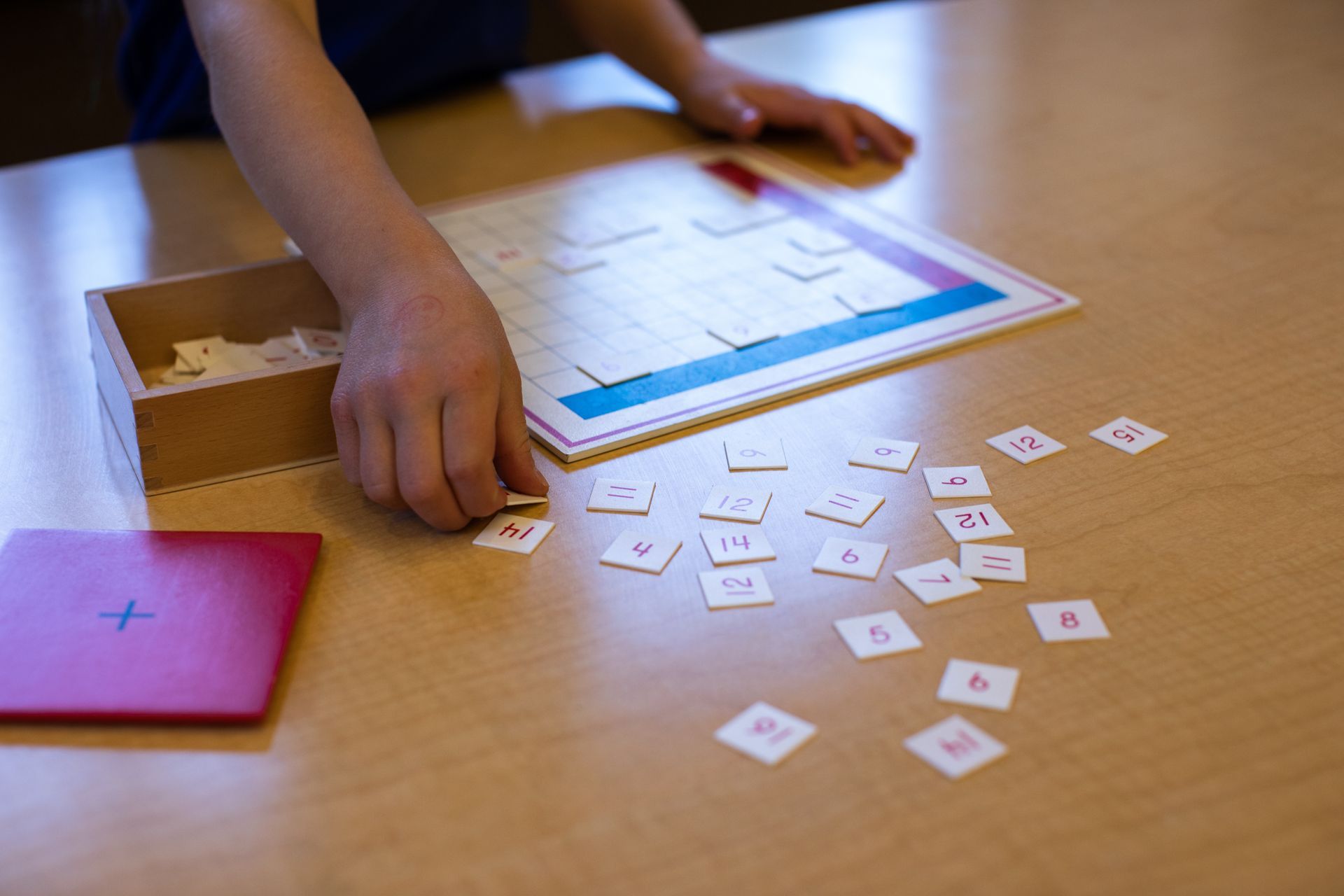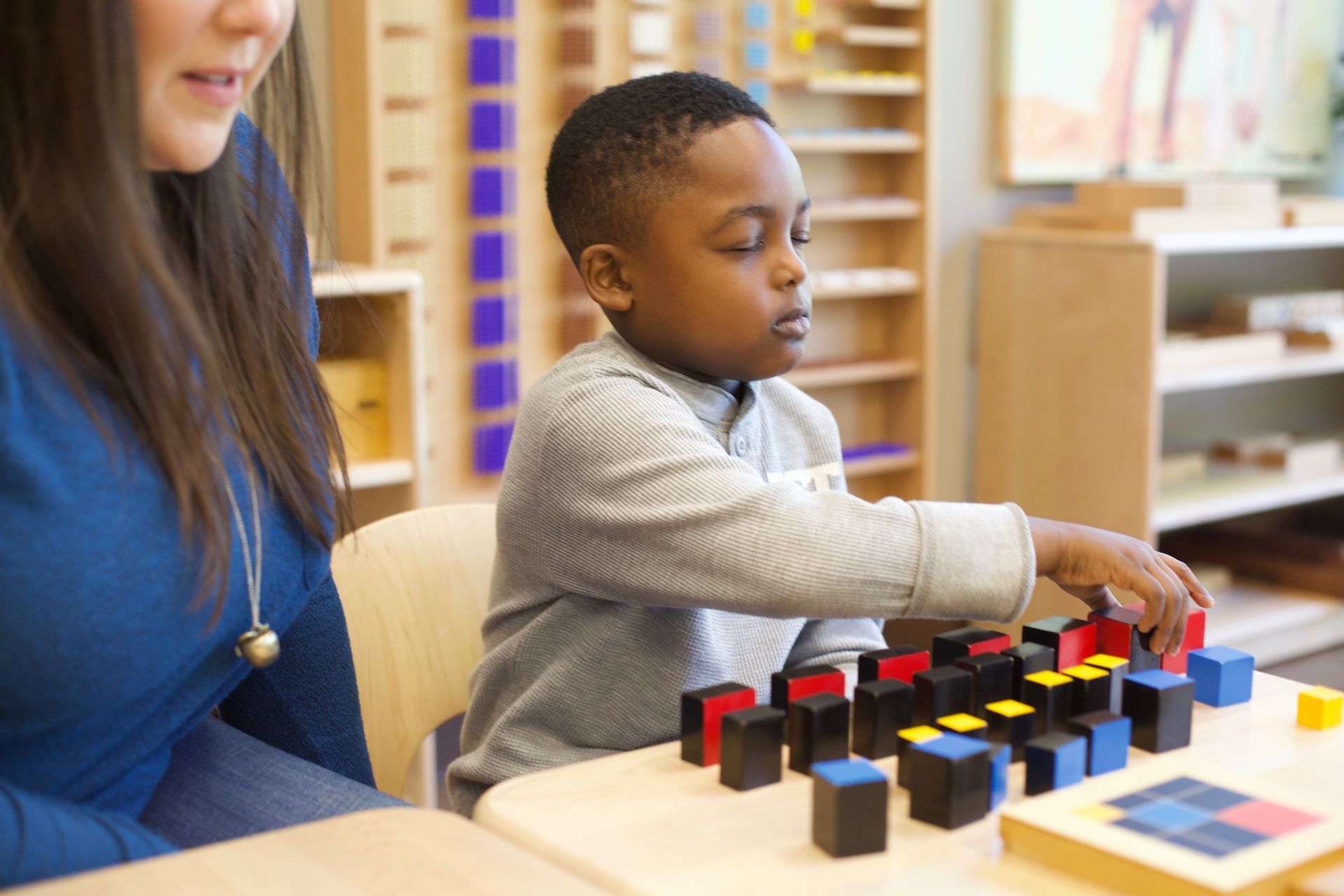
In Montessori toddler and primary classrooms, we offer specially designed materials to help young children refine their physical senses. Beyond the classic five—sight, touch, hearing, smell, and taste—Montessori education targets a lesser-known "sixth sense": the stereognostic sense.
What Is the Stereognostic Sense?
Derived from the Greek words stereo ("around") and gnosis ("to know"), stereognosis is the ability to recognize the shape, size, and texture of a three-dimensional object purely through touch, without visual or auditory cues.
“They are very proud of seeing without eyes, holding out their hands and crying, ‘Here are my eyes!’ ‘I can see with my hands!’”
— Dr. Maria Montessori, The Montessori Method
When a child explores an item with their hands, they combine tactile input with muscular movement. This dynamic interaction creates a rich mental image. Every texture felt and form traced forms a lasting neural memory. When paired with precise vocabulary, these tactile experiences give children a remarkably accurate understanding of the physical world.
Unlocking the Stereognostic Bags
To cultivate this capacity, our classrooms use Stereognostic Bags. These drawstring pouches contain everyday items children have already encountered, ensuring they have the language to name what they feel.
We introduce these bags in progressive stages:
- Categorized Objects: 4 to 6 related items from a familiar set (e.g., kitchen utensils or art supplies).
- Unrelated Objects: 4 to 6 diverse items with varied textures (e.g., a smooth pebble, a soft sponge, a metal funnel, a piece of velvet).
- Paired Objects: 3 to 4 matching sets of items, challenging the child to feel for duplicate shapes.
The Classroom Experience
The presentation begins with a deliberate, enticing lesson:
- The guide and child carefully unpack the bag, naming each item and placing it on the mat.
- Once the items are returned to the bag, the guide closes their eyes, reaches inside, and feels an object.
- With quiet enthusiasm, the guide names the object before pulling it out to reveal it.
Children are routinely captivated by this "trick"—naming something without looking at it feels like pure magic! Soon, the child eagerly takes their turn. When working with paired objects, they reach in to find the exact twin of an item using touch alone.
Why It Matters
When a child identifies an object blindfolded, their brain processes sensory feedback to build a 3D mental model. This practice refines fine motor control, sharpens memory, and deepens concentration.
“When the hand and arm are moved about an object, an impression of movement is added to that touch. Such an impression is attributed to a special, sixth sense, which is called a muscular sense, and which permits many impressions to be stored in a ‘muscular memory’...”
— Dr. Maria Montessori, The Discovery of the Child
Stereognostic bags are just one example of how Montessori materials transform abstract sensory processing into joyful, hands-on learning.
Want to see our sensorial environments in action?
Schedule a tour today to experience the Montessori difference firsthand!