
March 16, 2026

The Power of Presence: How Adults Shape Learning in the Early Years

March 16, 2026

The Power of Presence: How Adults Shape Learning in the Early Years

In Montessori, we often focus on how the environment educates the child, but just as powerful as the physical space is the presence of the adult within it. For children in the first three years of life, adults are not simply caregivers or teachers. We are models of movement, language, emotional regulation, and relationships.


Being present with young children is about being present in a different way.


From Birth to About 14 to 16 Months


Infants are forming their earliest understanding of the world and of themselves. They observe everything! So the adult’s role requires a quiet strength and a deep level of self-awareness.


To be present with infants, we must love without expectation. Infants are not able to return affection in predictable ways, and presence cannot be dependent on feedback or validation. This work requires patience, generosity, and emotional steadiness.


Movement also matters deeply at this stage. Infants study how adults walk, reach, sit, and handle objects. Slow, intentional movement gives children something meaningful to absorb. When adults rush, babies feel it, even if they cannot name it.


Our language, too, must be precise and respectful. Clear enunciation and specific wording help infants build an accurate internal map of their world. Vague language like “that” or “over there” offers little clarity. Instead, we want to name what we see and what we are doing: “I am placing the cup on the table.”


Infants cry as their primary form of communication. Being present means responding without panic or frustration, and making thoughtful decisions even when there are multiple demands on our presence. Emotional regulation in adults becomes a sense of emotional safety for the child.


Dynamic Toddlers


As children grow into toddlers, our presence still needs to be very intentional, yet it also becomes more dynamic.


While toddlers are building independence, they still need deep connection. For adults, this means remaining loving without demanding affection or closeness. Even physical affection requires consent: “Would you like a hug?” or “Do you need some comfort?” Respecting children’s autonomy builds trust and self-awareness.


This stage is full of transitions, especially for children navigating new siblings, new communities, or a growing awareness of others. Sometimes toddlers want to be capable and independent. Then sometimes they want to be cared for like a baby again. Presence means honoring both without pushing the child prematurely in either direction.


Limits are a key expression of presence. Clear, consistent boundaries create structure, and structure supports independence. A few simple rules, maintained calmly and consistently, help children orient themselves in the world. 


If power struggles emerge, we can use them as opportunities to reflect on control rather than behavior. If children have tantrums, presence means staying close without escalating. During the height of anger or upset, we may simply ensure safety. When a child moves into sadness or overwhelm, we can offer comfort and reassurance. The goal is not to stop the tantrum, but to support a child through it.


Flexibility is another essential part of presence. Although routines give children a sense of security, rigidity can disconnect us from their real needs. Sometimes the best choice is to go outside, to move, or to shift the plan. When children feel secure, they can adapt, and so can we.


Finally, presence means embracing life alongside children. Young children notice the world with fresh eyes. Weather, seasons, light, and movement all become sources of joy and wonder. When we allow ourselves to feel awe again, children experience validation that life is something rich and meaningful.


Our Inner Work


Being present with young children is demanding, not because of what children require, but because of what we must bring: patience, humility, emotional regulation, and a willingness to slow down.


This work invites us to become more aware of ourselves: our language, our pace, our reactions, and our assumptions. In doing so, we offer children not just care, but a living model of how to be human in relationship with others.


Presence is not perfection. It is mindful attention. And for young children, that attention becomes the foundation upon which everything else is built.


Please visit our school in Gilbert, Arizona, to learn more about how we think about the role of adults in children’s learning environment!
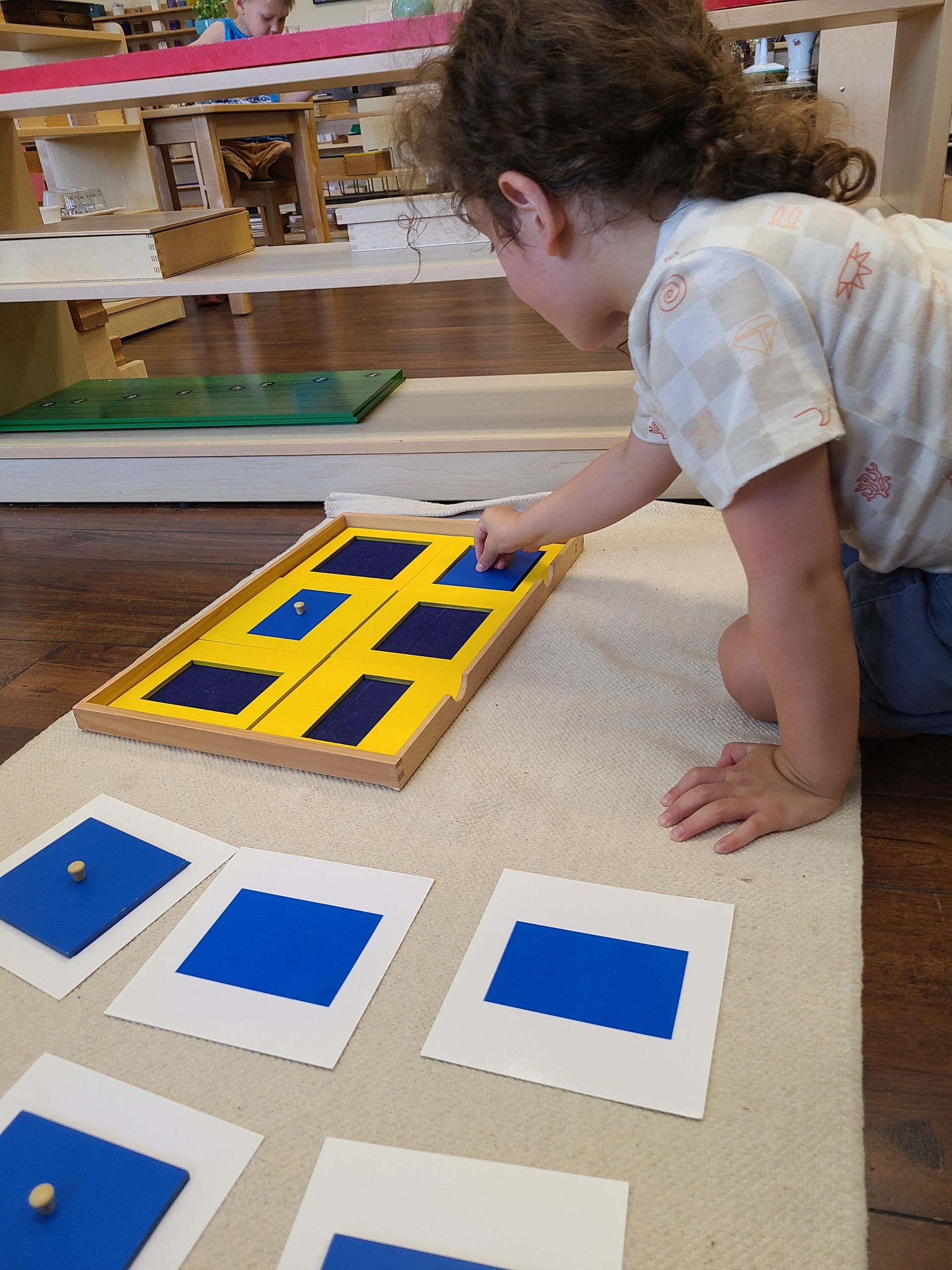
Child working with the Montessori geometry cabinet on a working mat
September 7, 2026
Discover how the Montessori Geometry Cabinet in our Primary classrooms builds fine motor skills, enriches vocabulary, and prepares young children for reading and math.
August 31, 2026
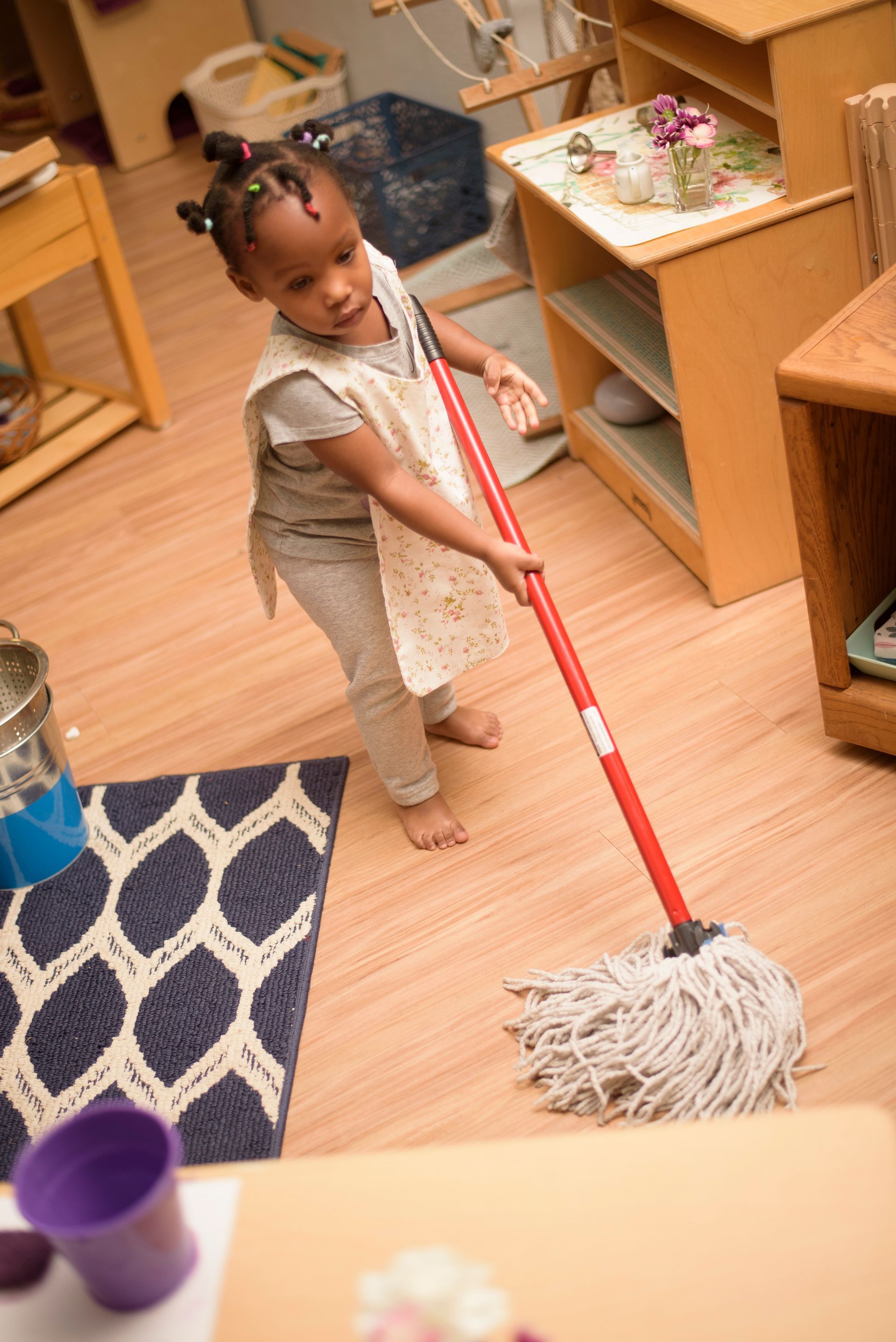
Raising children is a beautiful, surprising, heart-warming, and occasionally challenging adventure. When navigating the more difficult moments—whether it is a spilled snack, a forgotten chore, or a broken boundary—it can be tough to know the best way to respond. As humans, we all make mistakes, and we are constantly learning throughout our lives. How can we best guide our children through their mistakes in a manner that is both gentle and effective? In the Montessori environment, we look at these moments not as infractions requiring punishment, but as vital learning opportunities. By shifting away from arbitrary punishments and focusing instead on natural and logical consequences, we help children develop genuine responsibility and internal discipline. The Power of Natural Consequences Natural consequences are the outcomes that happen organically as a direct result of a person’s action or inaction. These consequences are never determined or enforced by an adult; they simply occur through interaction with the physical world. If a child decides not to wear a coat outside on a chilly Gilbert morning, the natural consequence is that they will feel cold. If they choose not to eat their breakfast, the natural consequence is that their body will feel hungry later. When your child experiences a natural consequence, the experience itself does the teaching. No negative parental intervention is necessary. In fact, adding an adult lecture or a reminder like "I told you so" actually detracts from the lesson. The physical reality speaks for itself, allowing the child to internalize the data and make a different choice next time. The Structure of Logical Consequences Logical consequences are implemented by an adult, but they are directly, logically related to the child's action. For example, if a child spills their snack on the kitchen floor, a logical consequence is to guide them to where the dustpan is and ask them to clean it up. The core distinction of a logical consequence is its intent: it is not a punishment designed to make a child suffer or repent. Instead, it is a supportive learning opportunity connected directly to the behavior. The goal is to give the child a chance to repair the situation, recognize the error, and learn how to avoid it in the future. When presenting a logical consequence, we must take great care to avoid shaming. The situation should be framed so that the child is never defined by their behavior. The behavior is simply an action that needs a constructive solution. When to Step In: Safety Boundaries Do these consequences really work? Yes, the vast majority of the time. However, there are absolute exceptions where an adult must step in immediately rather than letting a consequence play out: Physical Danger: When the child’s choices put their own safety at risk (e.g., running into the street). Harm to Others: When the action puts someone else's well-being in jeopardy. Delayed Feedback: When the natural consequence does not happen immediately enough to connect with the behavior. For example, sneaking extra holiday candy might be highly enjoyable in the moment, as the long-term health consequences are not immediate enough to make a meaningful impression on a young child. A How-To Guide by Development Stage When observing a safe natural consequence, resist the urge to rescue your child. The outcome may not be pleasant, but if it is safe, allowing them to feel the result of their choice is a gift that builds resilience. When creating a logical consequence, it is essential to keep it appropriate for your child's developmental capacity. A two-year-old who makes a large mess with their toys will need you to sit with them and guide them step-by-step through the cleanup. An elementary-aged student, however, is fully capable of handling the task independently. Here are a few real-world examples of how to apply logical consequences across different ages: The Primary Years (Ages 3 to 6) The Situation: A five-year-old was dancing while eating and spilled yogurt across the dining room floor. The Logical Consequence: Walk them gently through the restoration process. Bring them to the sink to retrieve a sponge, help them fill a small bucket with warm water, and demonstrate one or two wipes before passing the sponge to them to complete the cleanup. The Situation: A six-year-old was asked to clean up their building blocks before bed but left them scattered across the rug. The Logical Consequence: Let the child know calmly that because the blocks were left out, they will be placed in a temporary storage box in the closet for a few days before they can be used again. The Elementary Years (Ages 6 to 12) The Situation: An eight-year-old was playing baseball in the front yard where they were asked not to, and an errant ball broke a neighbor's window. The Logical Consequence: Work with your child to identify age-appropriate ways they can earn money or contribute household help to directly assist in paying for the replacement glass. The Situation: A twelve-year-old chose to spend their afternoon playing video games instead of completing their schoolwork, and they seem unbothered by the natural feedback from their guide at school. The Logical Consequence: Establish a clear environmental rule: video games or screen time may be accessed only after homework is completed and verified, not before. The Teenage Years (Ages 13+) The Situation: A newly-driving seventeen-year-old did not return home by the agreed-upon curfew. The Logical Consequence: Uphold a pre-established boundary regarding the family vehicle. Because the timeline agreement was broken, their independent driving privileges are paused for a specific, designated window of time. Keeping the Long-Term Goal in Mind Implementing natural and logical consequences requires an immense amount of parental time, consistency, and patience. Because this approach focuses on building long-term capability rather than short-term compliance, it is most effective when you have the emotional bandwidth to follow through completely. If we give in halfway through, the educational opportunity is lost. We also recognize the realities of modern family life. If your five-year-old spills yogurt just as you are rushing out the door for an important morning meeting, you may not have the time for a collaborative cleanup. In those moments, it is perfectly okay to say, "We need to go, so I am going to wipe this up quickly now. This afternoon, I'll show you how to use the mop so you're ready to handle it next time." Building resilient, self-disciplined children is a collective journey. If you ever want to discuss these strategies further or look at how we establish these behavioral boundaries in our Toddler, Primary, and Elementary environments, please reach out to your child's guide. We are always happy to share resources and support our family community. In addition, we invite you to schedule a tour to see natural and logical consequences in action in our school environment.